 iPhone
AlerTCG. The vaults, in your pocket.
What every tokenized copy of a graded card sells for, every slab a wallet holds on Polygon or Solana, whether the plastic paid for itself — and what sold on the vaults yesterday, on the front door every morning. On the Lock Screen, in Spotlight, and from Siri. Free, with no account and no wallet connection. By Re:TCG.
iPhone · iOS 18 or later · free · no in-app purchases · submitted
What it does
The price of a graded card is what its copies sold for.
A cert is one copy. Most slabs anyone owns have never been listed anywhere, so the app prices the population: every tokenized copy of that card at that grade, on both vaults, sold and asked kept apart. Then it tells you when something moves.
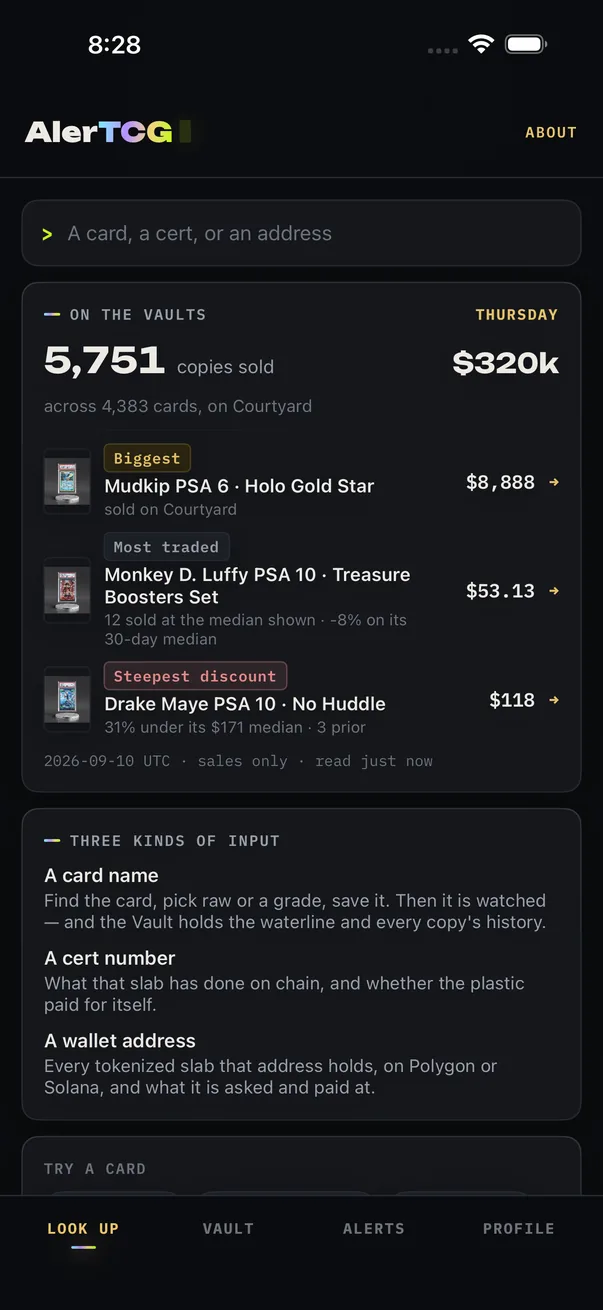
The vaults, every morning
How many copies changed hands on Courtyard and Collector Crypt yesterday, for how much, the biggest fill, the steepest discount against a card's own thirty-day median, and the rising star — or, on a flat day, simply the most-traded card, labelled as such. Sales only, never asks. On the front door, on the widget, and as a 9:00 note if you want one.
Sold, not asked
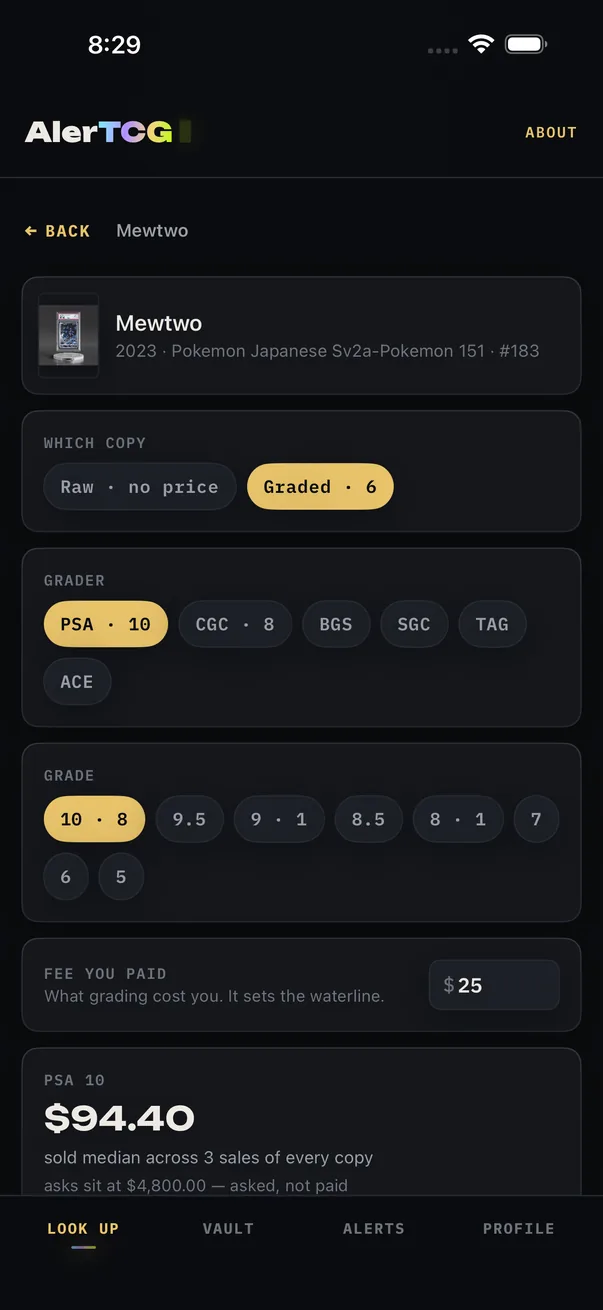
A graded card's price is what every tokenized copy of that card at that grade actually sold for — a median across the population, with asks shown beside it and named as asks. One $4,800 listing does not move a card that sells at $95.
Find, choose, save
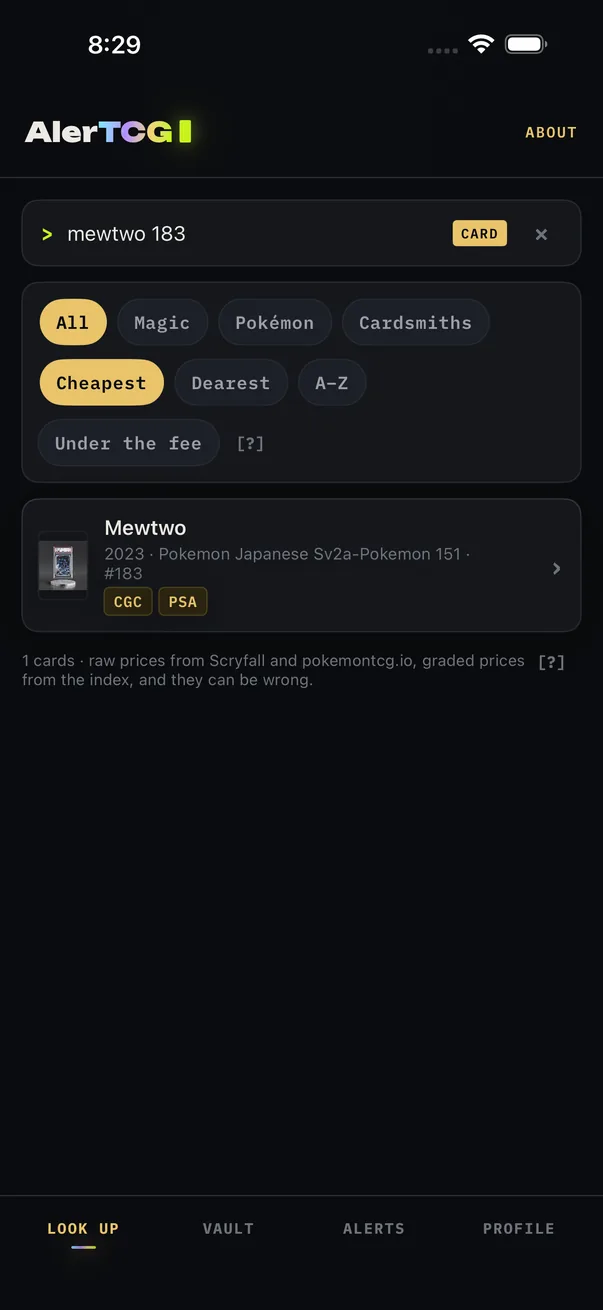
Type a name, pick the card, then choose raw or a grade — PSA 10, CGC 9.5 — from pills that say how many copies the index has seen. One price on screen at a time, with what it rests on. Save it and it is watched.
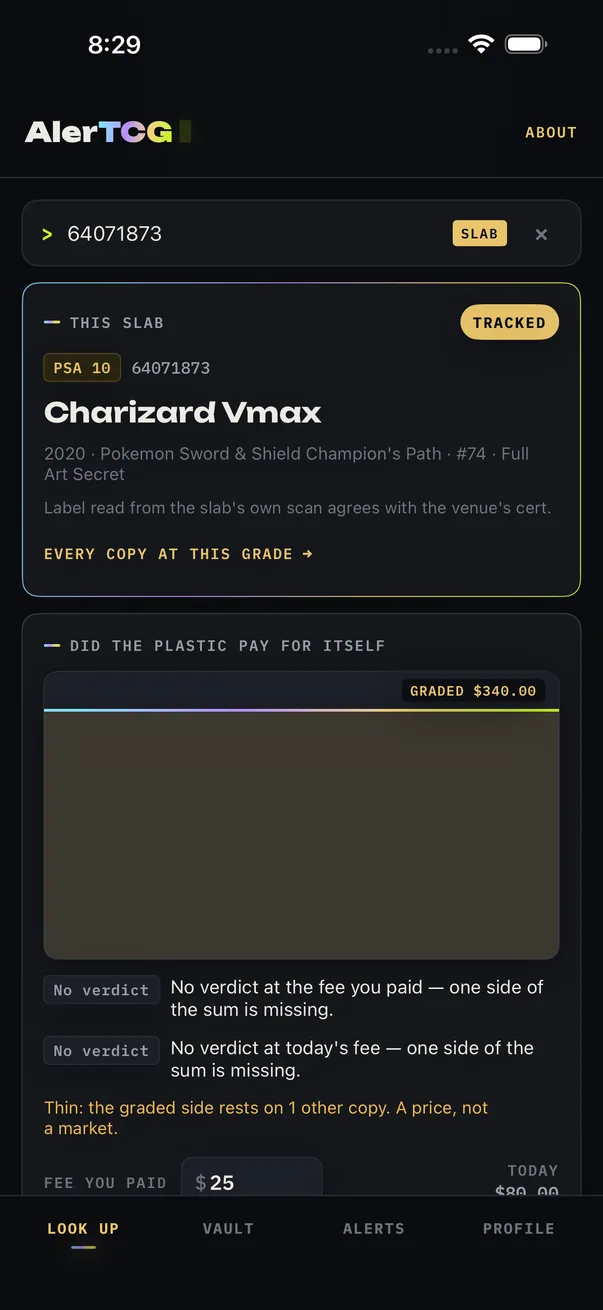
Did the plastic pay for itself?
Grading cost about $25 when most slabs were made and about $80 now. The waterline is drawn at both: the raw price, the level the grade had to reach at each fee, and where graded copies actually sit. Two verdicts, because the card did not change — the fee did.
A wallet, read
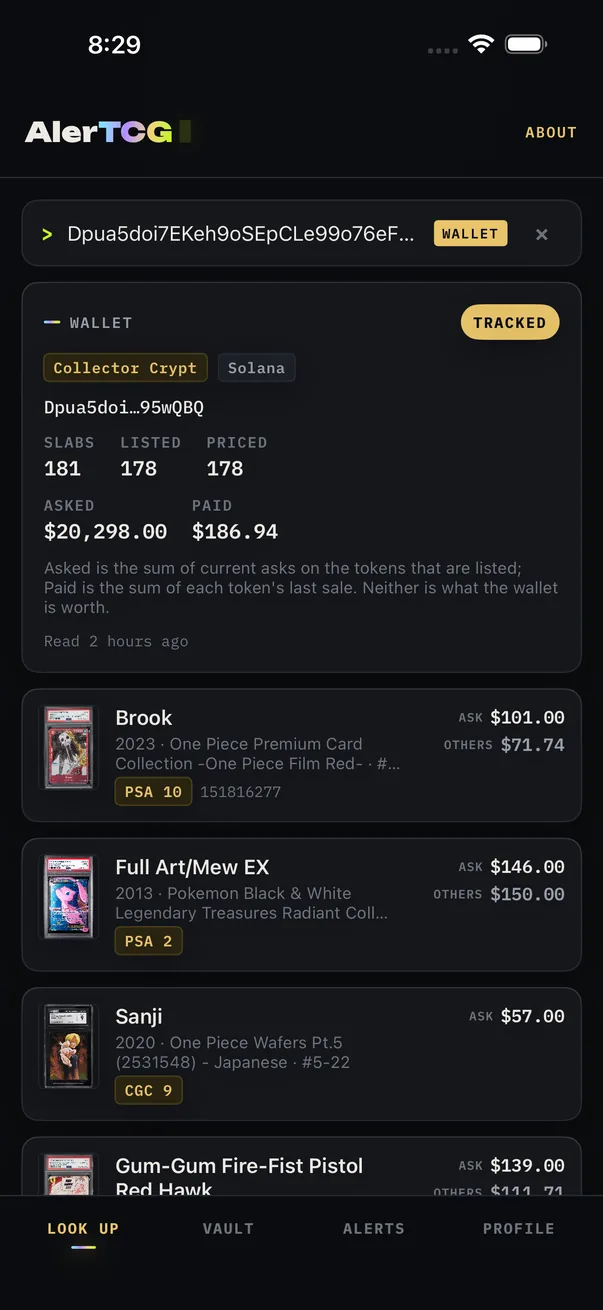
Type any public address on Polygon or Solana and see every tokenized slab it holds, what each is asked at, what it last sold for, and what other copies go for. Totals are sums of asks and sums of last sales, labelled as such — never "what your wallet is worth".
Alerts, on the phone
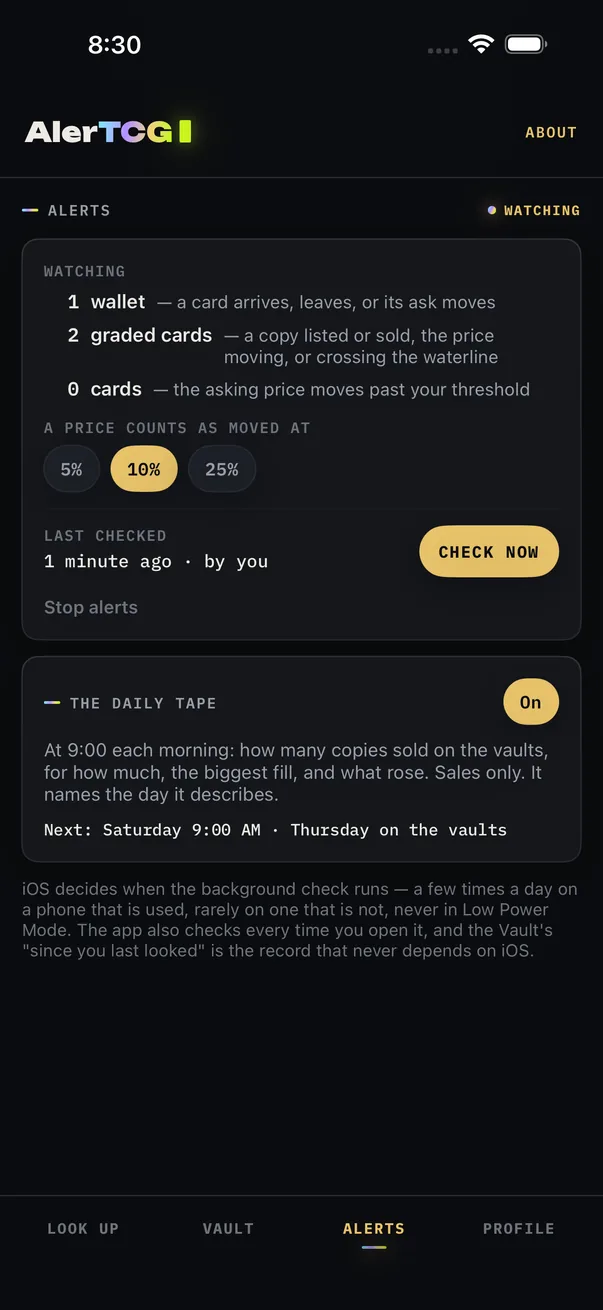
Track wallets, graded cards and cards. When iOS allows, the app re-reads them in the background and tells you when a card arrives or leaves, when a copy is listed or sold, when a price crosses the waterline or moves past your threshold. No push service, no account: the check runs on the phone.
Every copy's history
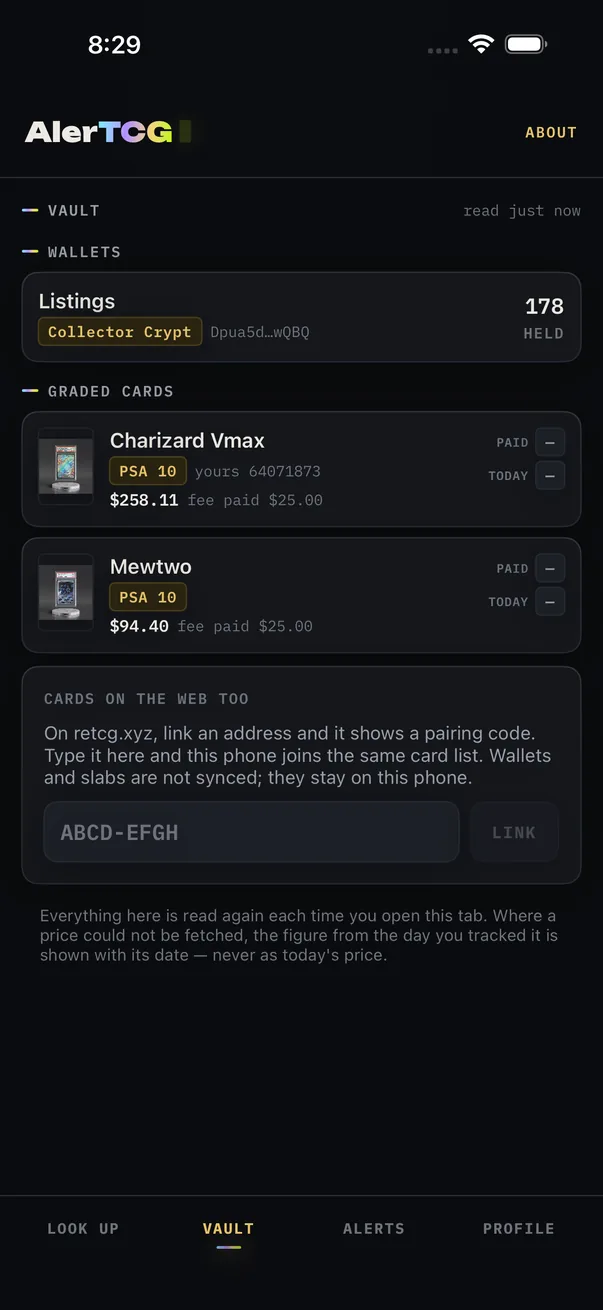
Behind each graded card: every tokenized copy the index has seen, listed or sold, on which chain, for how much and when — with the cert where the vault printed one. The population, not a guess.
Watch a wallet you do not own
Track any public address and be told when a card arrives, leaves, or its ask moves. Nothing about it is yours and the app never says it is; it is a window, not a login.
A profile you can post
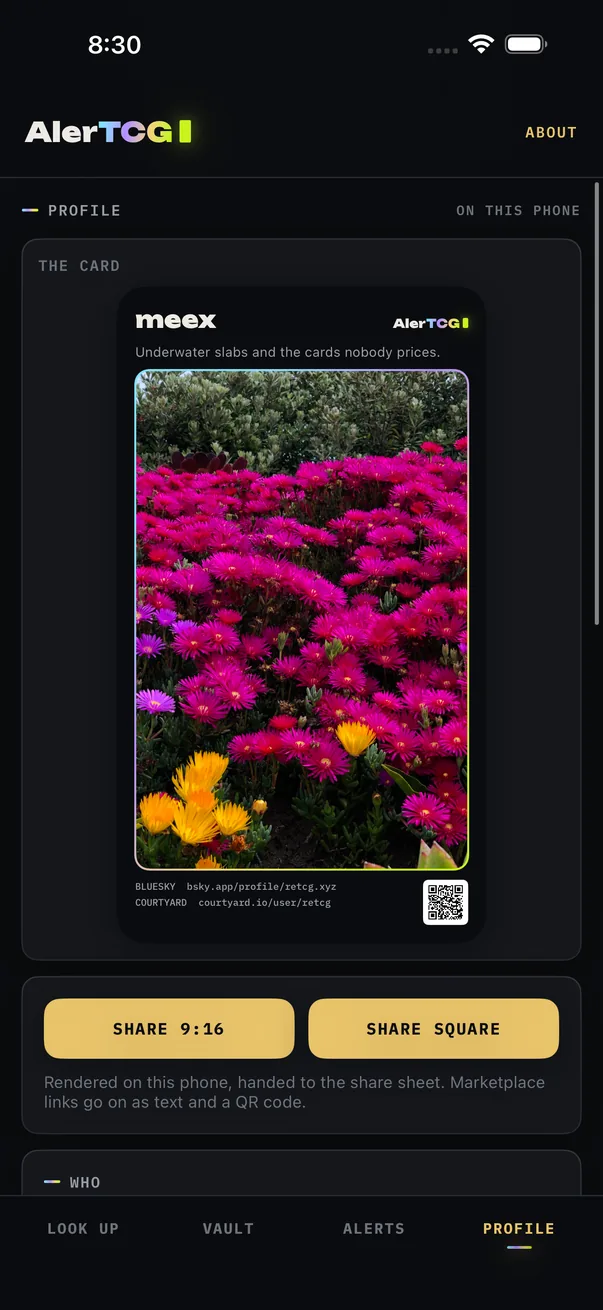
A handle, one line, your links, one showcased card and your own photo of it, rendered on the phone as an image for a story or a post. Marketplace links go on as text and a QR code and are never tappable in the app.
Honest about what it does not know
A card with no price shows no price, never a zero. A grade the index has not seen says so and is watched anyway. A figure that could not be refreshed is shown with the date it was read. Pokémon prices come from a free public API that is often down; when it is, the app says so.
Read-only
No wallet connection, no keys, no signing, nothing to buy, no link to anywhere you could. It reads public card and chain data and shows it to you.
By Re:TCG
The same index, the same break-even and the same sold-not-asked rule as this site, built native. Cards you save can pair with the website so one list covers both; wallets and graded cards stay on the phone.
Without opening it
It works without being opened.
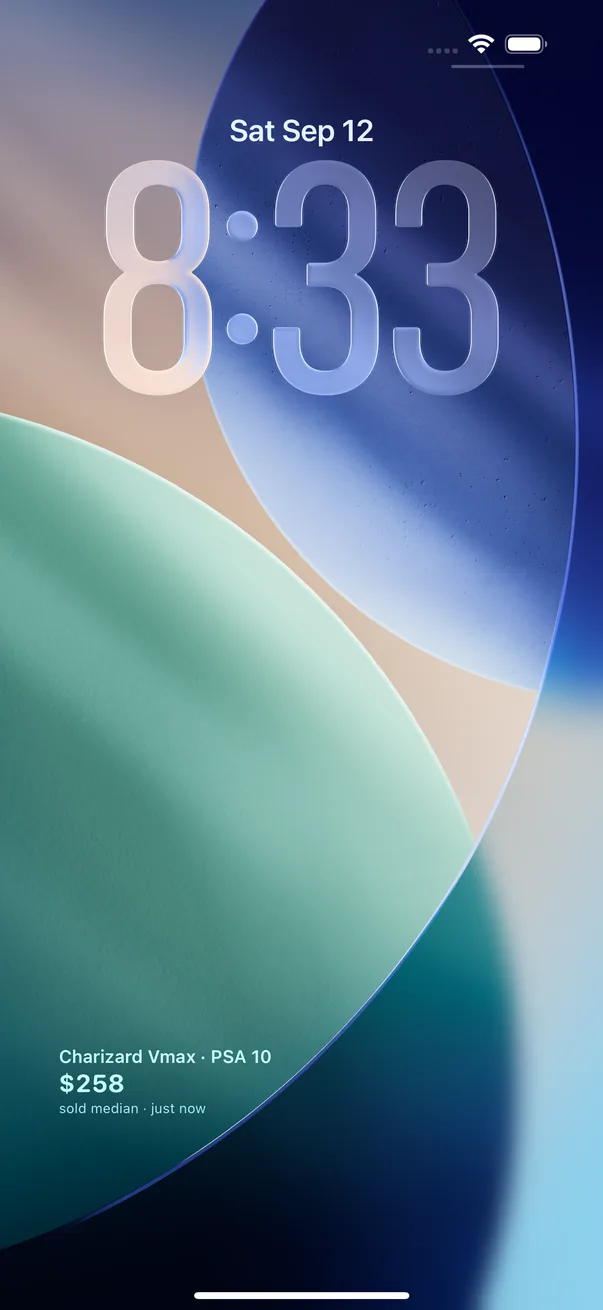
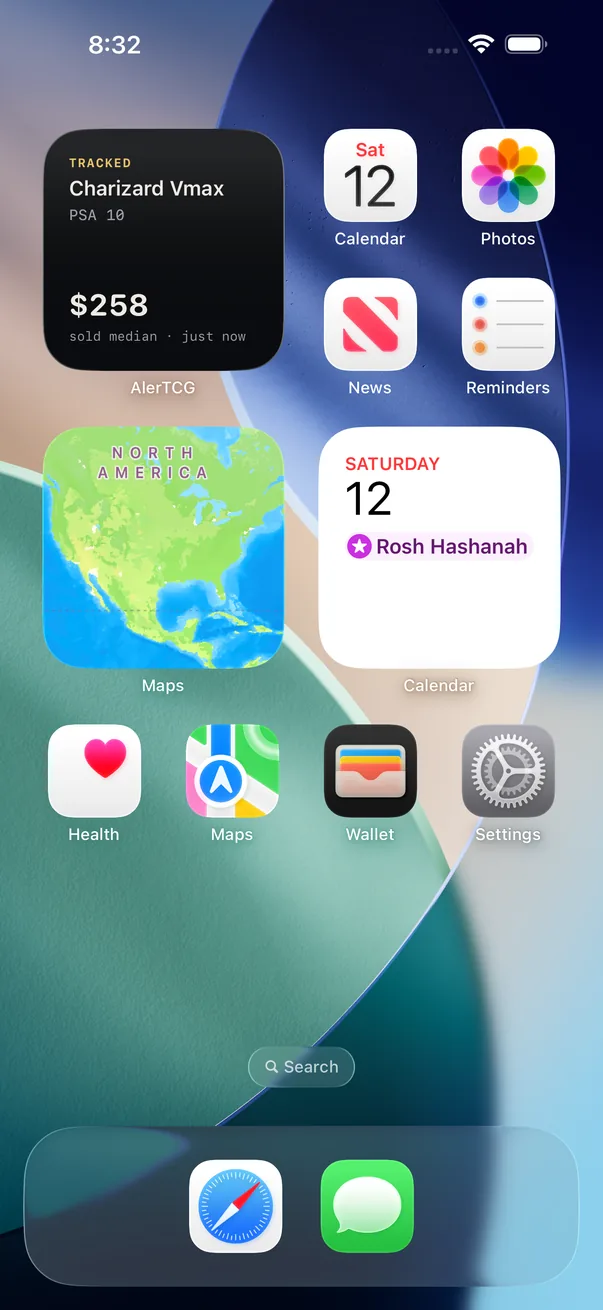
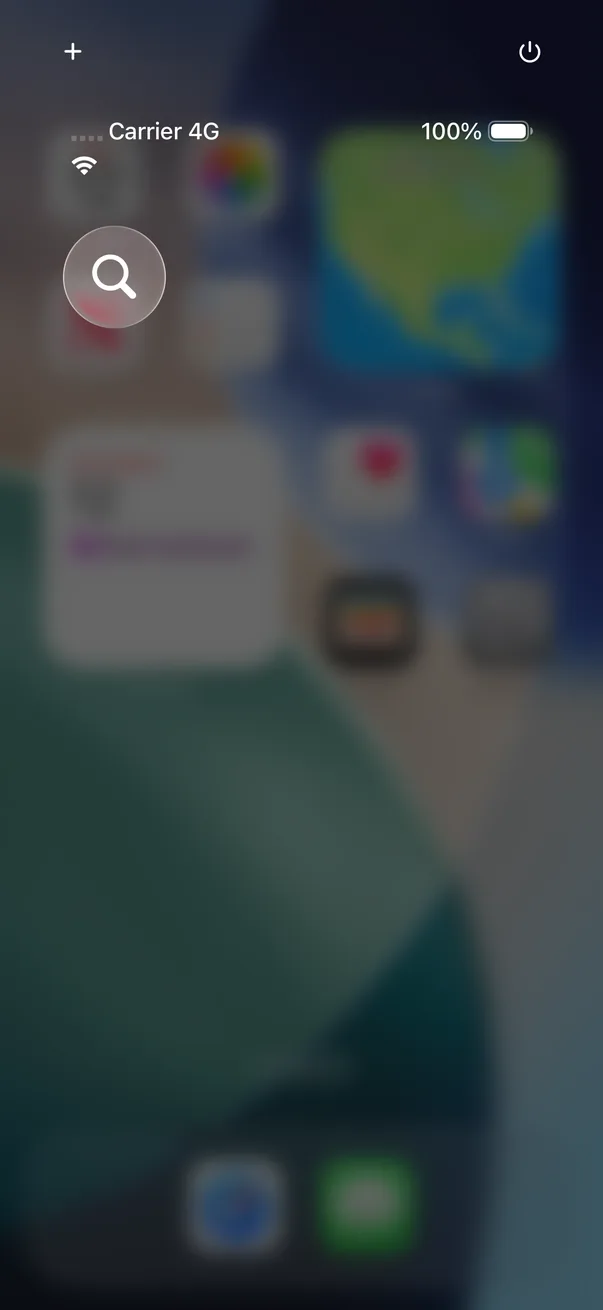
A tracked card's sold median on the Lock Screen and the home screen, with the time it was read. The card in Spotlight. A Control Center button that opens the prompt. Ask Siri. Every one of these reads the phone's own data; nothing is sent anywhere, and the app icon badge counts what was found while you were away.
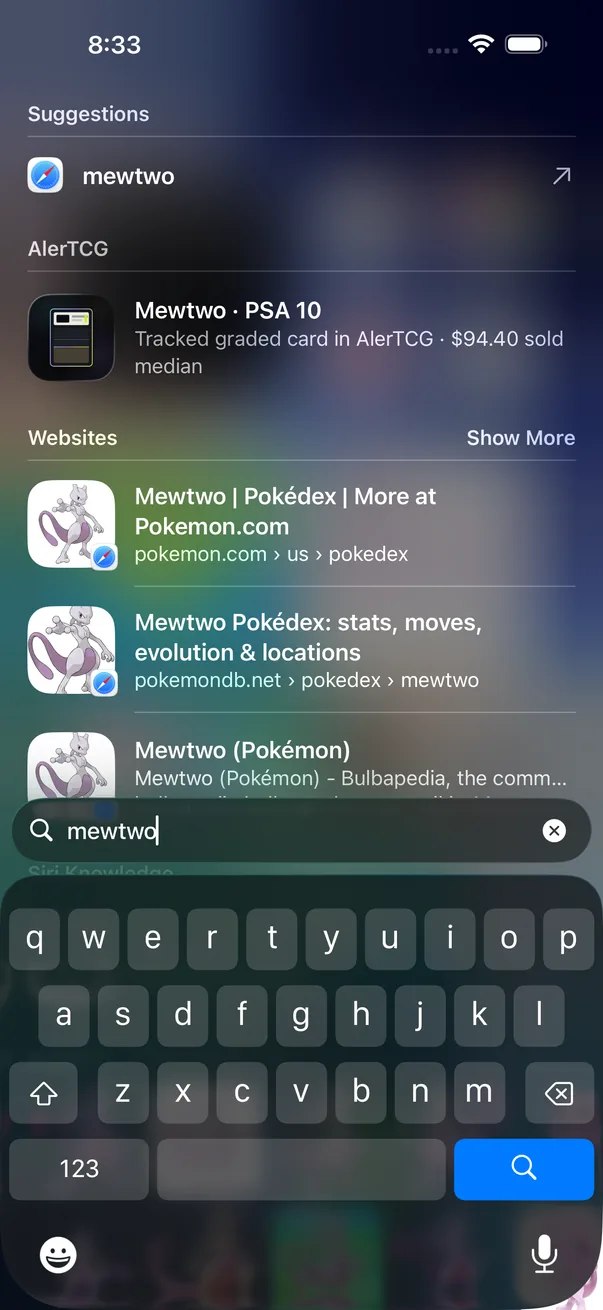
Ask Siri
“What is my Mewtwo PSA 10 worth in AlerTCG?”
Mewtwo PSA 10: $94.40 sold median across 3 copies, read just now.
The reading is live. If the index does not answer, Siri says the last figure the Vault holds and when that was read — a figure with no time is the one thing the app never gives.
The phrases
- “What is my card worth in AlerTCG”
- “Check card in AlerTCG”
- “Look up a card in AlerTCG”
Nothing to set up: the phrases exist for every card the moment it is tracked, and they show in the Shortcuts app under AlerTCG. Siri offers the cards by name.
Every screen
Every screen, as it is.
Dark only, by design — the foil reads on graphite and not on paper. Each shot is a real capture of the current build, driven by the same test that checks the screen still works.
What it will not do
It cannot touch your money.
No wallet
It connects to nothing, holds no keys and signs nothing. Typing an address reads public chain data and proves nothing about who owns it; the app never claims a wallet is yours.
No account
Nothing to sign up for, no login, no password. Tracked wallets, graded cards, the alert log and the profile — photo included — stay on the phone. Cards you save sync only if you pair with the website yourself.
No purchases
Free, with no in-app purchases, no subscription and no advertising. Nothing in the app is unlocked by holding a token.
No link to buy
No button, link or call to action to Courtyard, Collector Crypt or any marketplace. Marketplace links you put on your profile appear as text and a QR code and are never tappable.
Prices come from public sources and on-chain records and are reference data — they can be delayed, matched to the wrong printing or parallel, or simply wrong. A price is not an offer. Re:TCG and AlerTCG are not affiliated with any trading card game publisher, grading company, vault or marketplace.